
Your Witchy Mother
You bring the mess. I make the spell. You work the magic.
How Religion Teaches You to Distrust Yourself (And How to Reclaim It)
They didn't just teach you the rules. They taught you not to trust the part of you that questioned them.
That's the piece that most deconstruction content doesn't say clearly enough. We talk a lot about the damage high-control systems do: the shame, the fear, the years of contorting yourself into acceptable shapes. What we talk about less is the specific technology they use to get there. And the most effective tool in that technology is this: they teach you that your own knowing is dangerous.
Not in those words, usually. They teach it through the slow, methodical replacement of your inner authority with an external one.
Here's what that looks like from the inside.
Watch the Deep Dive
Listen in the Dark
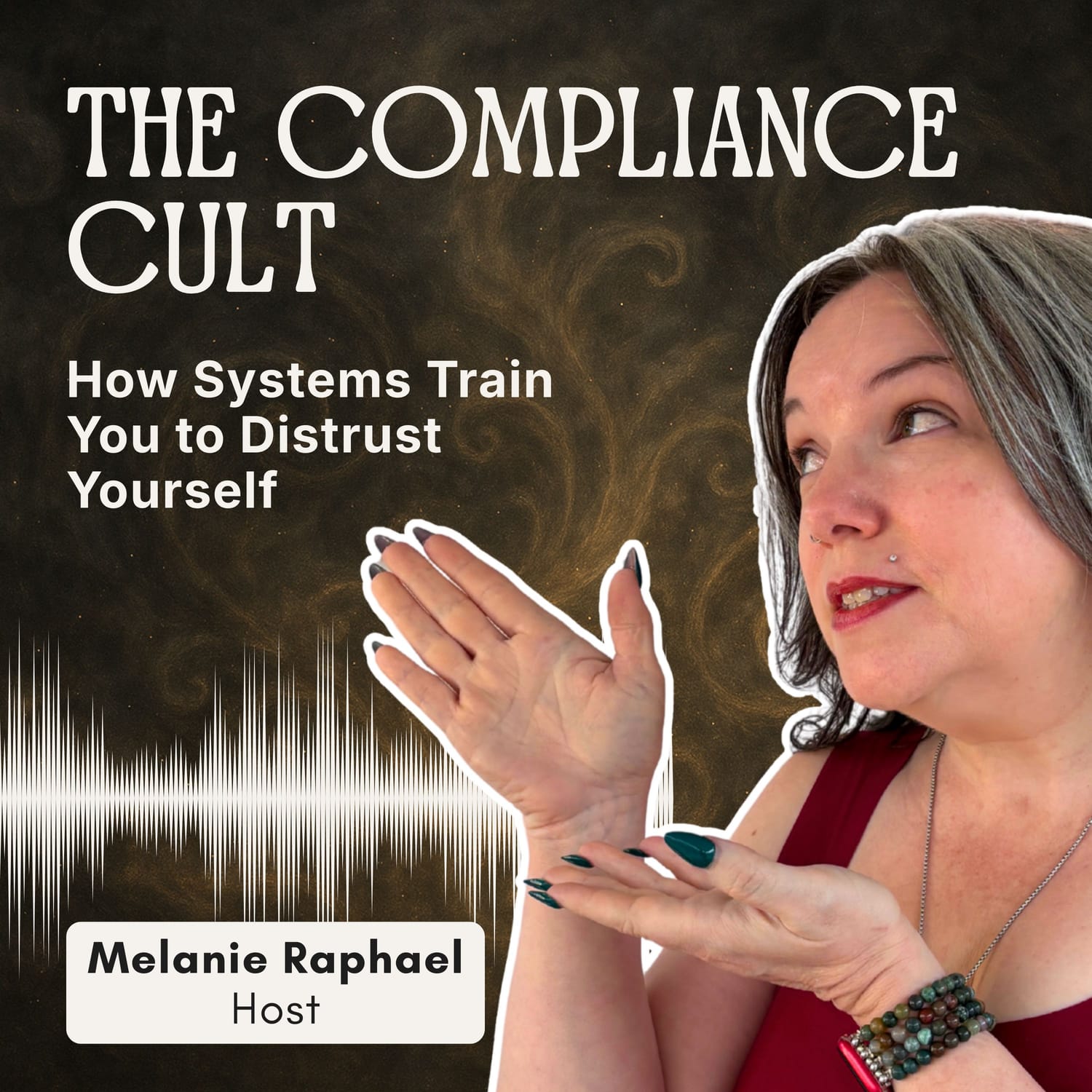
The Rulebook Was Never About the Rules
I grew up with a list of prohibitions that would make your head spin. No shows with worldly content. No nail polish. No earrings that moved. Skirts to the knee. No talking back. No questioning the pastor. No questioning my parents. The rules were specific, numerous, and enforced with enough consistency that by the time I was a teenager, I was enforcing them on myself.
That's the point. Not the rules themselves — the self-enforcement. When a system successfully installs itself inside you, it doesn't need an external enforcer anymore. You become the warden of your own compliance.
At eighteen, I bought clothes with my own money for the first time. My mother threw them away while I was at work. I called the police — an act that felt, in my body, like heresy. She kicked me out that night. And I moved in with a man who would spend years taking the voice she'd tried to leave exposed.
One system hands you to the next. That's how compliance compounds. And that hand-off is never clean or obvious — you don't see it happening until you're already inside the next container.
But here's what I didn't understand then, and what took me years to name: the clothes weren't the real target. My knowing was. The message wasn't those clothes are wrong. The message was your judgment cannot be trusted. We will tell you what is acceptable. Stay inside the lines.
How the Training Actually Works
High-control systems — whether churches, abusive family systems, high-demand marriages, or cults — all run the same basic software. They have one primary function: get you to outsource your authority.
The process goes like this.
First, they install an external authority above your own. God, scripture, the pastor, the husband, the father. Someone whose discernment is presented as more reliable, more righteous, more spiritually safe than yours.
Second, they pathologize your knowing. Your gut feeling is pride. Your anger is sin. Your doubt is spiritual weakness. Your desire is flesh. Every signal your body sends that says something is wrong here gets reframed as evidence of your own corruption — proof that you cannot be trusted to lead yourself.
Third, they reward visible compliance. The good girl is praised. She's chosen. She's held up as the example. Being soft, being small, not causing problems — these become the currency of belonging.
Fourth — and this is the one that runs quietest and longest — they punish deviation through withdrawal. Not always dramatically. Sometimes it's a look. A silence. A warmth that goes cold. Sometimes it's louder. But the message, every time, is the same: come back inside the lines, or lose the safety of belonging.
This works. Not because people in these systems are uniquely monstrous, but because the training starts when you are small and your survival genuinely depends on the adults around you. So your nervous system correctly files: compliance means belonging, belonging means safety. That filing doesn't update automatically just because you're an adult now, or because you've left, or because you intellectually understand what happened. Your nervous system doesn't care about your insight. It cares about what it's been taught to expect.
This is also, incidentally, why choosing yourself feels so risky at first — it's not weakness or indecision. It's your body doing exactly what it was trained to do.
Where Your Knowing Went
If you've done the therapy and the shadow work and can name all the patterns — and you still freeze before making a choice that's purely yours — this is why.
The compliance training doesn't live only in your thoughts. It lives in your body. And your body learned something very specific: your inner knowing is the threat. Not the rules, not the system, not the people enforcing it. You. Your gut. Your instincts. Your honest, clear sense of what's true.
When you had that instinct and someone you depended on told you it was wrong — repeatedly, from the time you were small, with enough emotional weight to register as survival information — your nervous system filed your own knowing as a hazard signal.
So now you're out. But your body still runs the same file.
This is why the path back is not analysis. You can understand something completely and still feel it running. I know women who can explain obedience conditioning in clinical detail and still can't trust their "yes" in the middle of a decision that matters. Understanding is not the same as un-installation.
The path back is practice. Small, repeated, embodied choices from your own authority. Picking the restaurant without asking if it's okay. Buying the thing you want without checking. Saying I don't like that without apologizing for having an opinion. Your nervous system learns through repetition and sensation, not through comprehension. You have to give it evidence, over and over, that your knowing is safe. That trusting yourself does not result in catastrophe or exile.
One thing that often shows up here: the guilt of receiving. That reflex is part of the same training — the same system that taught you not to trust your knowing also taught you that wanting things, needing things, and accepting things made you a burden. They're the same wound, different faces.
If you're in the early stages of this work and want a structured entry point, my Witch in the Pew workshop is a live ritual specifically built around reclaiming your authority in your body. It's seven dollars and it's real work, not theory.
What Sovereignty Actually Feels Like
I want to be clear about something, because most content about sovereignty makes it sound like confidence. Like certainty. Like suddenly knowing your own mind with a fullness that feels stable and clean.
It doesn't feel like that at first.
The first time you choose from your own authority — genuinely choose, not perform choosing — it will feel like wrongness. Like you're breaking a rule. Because you are. Every system that owned your compliance built a rule that said: your knowing is not the authority here. When you trust your knowing, you're violating that rule, and your nervous system registers that violation as danger before it registers it as freedom.
For me, the crack came on a Tuesday. I was alone in a house that was actually mine — no other people, no other opinions — and I turned on a crime drama. Something I'd never been allowed to watch. Too dark. Too worldly.
And I sat there watching two fictional detectives, and I thought: there is no one here to tell me this is wrong.
The freedom was so small. And so enormous I didn't know what to do with it.
That moment showed me how completely I'd been inhabited. Not in the big ways — the leaving, the escaping, the years of surviving. In the small, invisible, daily ways. The shows I'd never let myself watch. The thoughts I patrolled back into acceptable territory before they finished forming. The parts of my own inner life I'd learned to treat as suspicious.
Sovereignty doesn't live in the dramatic moments. It lives there — in the crime drama, in the nail polish, in saying I think and not immediately apologizing for it. In noticing the flinch and doing the thing anyway.
It lives in returning, again and again, to your own knowing as the first place you check. Before you look for permission. Before you ask if it's allowed. Before you make yourself smaller to fit through a doorway that, it turns out, is wide enough for all of you.
You Were Right to Know What You Knew
Your knowing didn't disappear. It never left. It's still in there — still sending signals, still trying to get through. It's just been trained to whisper. And then trained to apologize for the whisper.
The work of this series — what we're going to spend the next four weeks building — is about practice. About remembering what your knowing feels like before all the conditioning got layered on top of it. About giving your body enough repeated evidence that your own authority is safe.
You were right to know what you knew. You were right to feel what you felt. The system told you otherwise not because it was true, but because a woman who trusts herself cannot be controlled.
Start here. Start with naming one small rule you swallowed — one tiny prohibition that shaped something mundane and ordinary about how you lived. That's where your knowing went. And that's where it starts coming back.
If you're ready to do this work in community, The Witch in the Pew is a live ritual workshop for women reclaiming their authority after high-control systems. Seven dollars. Real work.
Or, if you're just finding me the Sinner's Grimoire is a free collection of five spells for sovereignty, glamour, money, protection, and receiving. It's the first step.
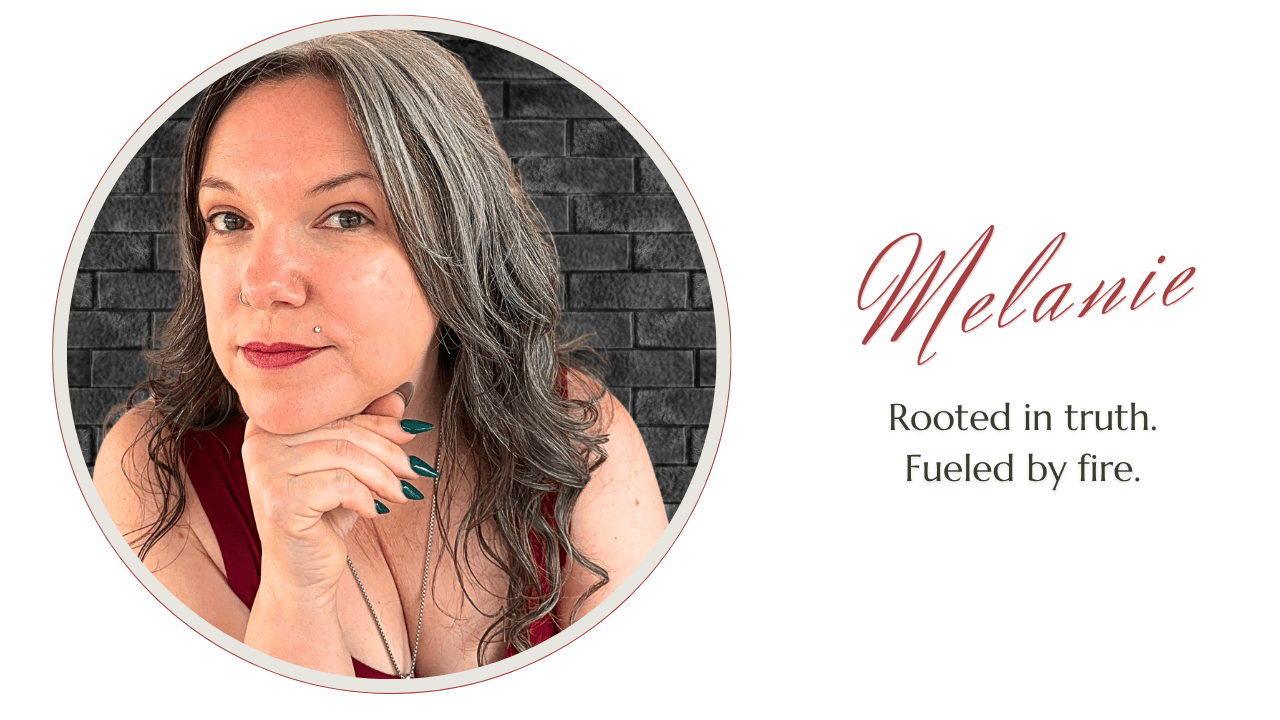
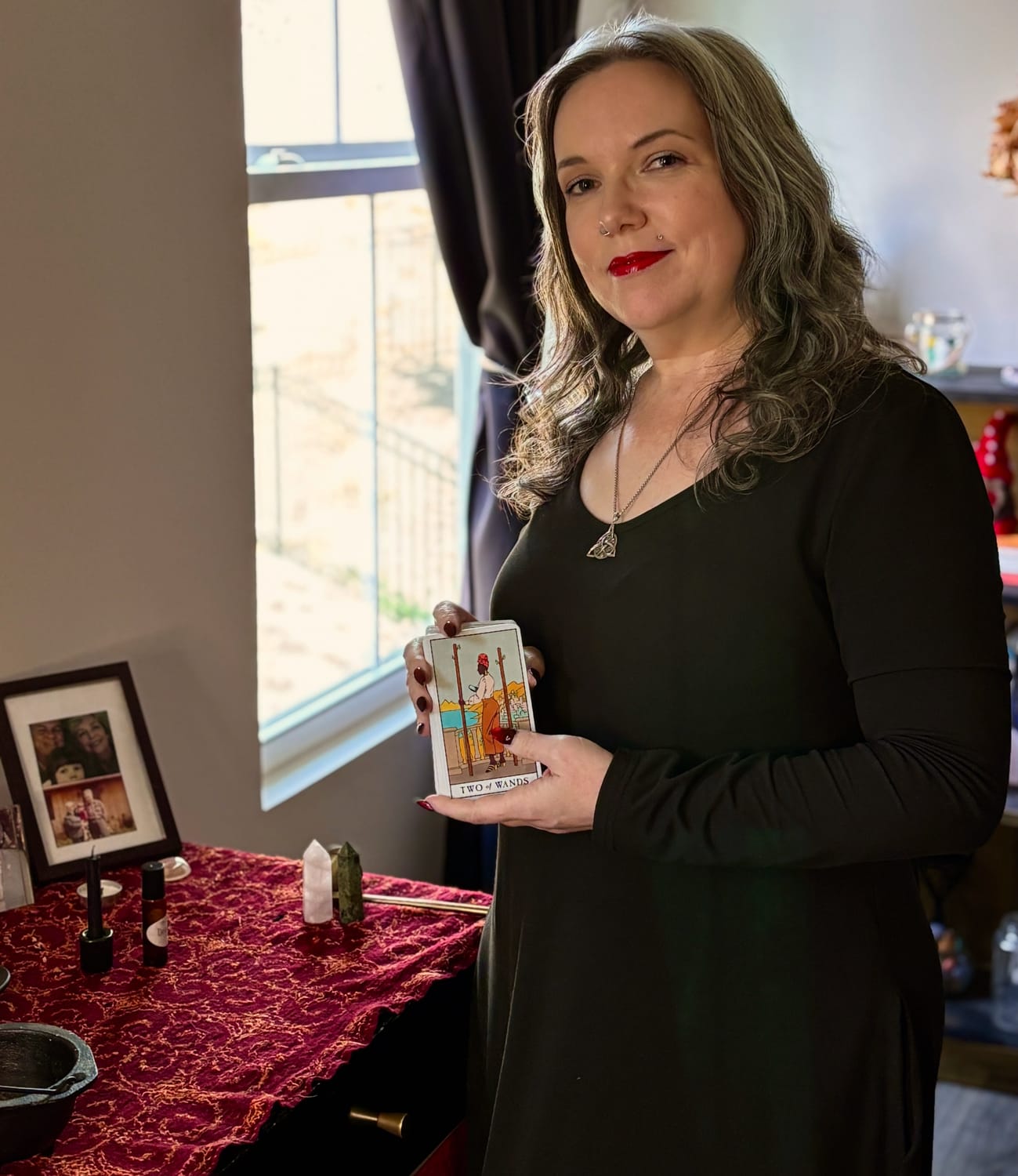
Everything your mother never taught you—without the guilt
I help women who left control-based systems remember their own power and live it daily. My work is grounded in sovereignty, practical magic, and truth-telling you can feel in your body. I’m the witchy mother who will pour tea, light the candle, and hand you the match.
Join My Mailing List
Thanks for stopping by, witch.
May your magic be loud, your rituals hold true, and your field be steady.




⚡ Built with Systeme.io | Fueled by feminine rage, mushroom coffee, and moonlight.